
Worth knowing
- 23 percent of buyers’ agents called kitchen staging very important; 68 percent of sellers’ agents staged a kitchen.
- EPA: dry water-damaged areas within 24 to 48 hours; an owner can usually clean mold under about 10 square feet.
- Raleigh does not collect remodeling debris such as sinks, mirrors, cabinets or countertops.
Kitchens and bathrooms are where buyers open doors, run water and look closely. Staging these rooms is less about decoration than about showing that everything is clean, dry and working. A bowl of lemons does not help if the cabinet under the sink smells damp.
What the survey says
In the National Association of REALTORS® 2025 Profile of Home Staging, 23 percent of buyers’ agents said staging the kitchen was very important and another 28 percent said somewhat important. Sixty-eight percent of sellers’ agents said they staged a kitchen when selling. Bathrooms ranked lower: 13 percent of buyers’ agents called bathroom staging very important. Both rooms, though, are where the survey’s most common recommendations, decluttering and whole-home cleaning, pay off most.
The kitchen in four passes
Pass 1: empty the counters
Leave one or two items at most: a cutting board and a bowl of fruit, or a coffee maker if it is attractive. Put small appliances, knife blocks, mail and chargers away. Clear the front of the refrigerator completely.
Pass 2: open every door
Buyers open cabinets and the pantry. Remove a third of what is inside, line up what remains and wipe the shelves. Look under the sink for drips, stains or soft cabinet floors.
Pass 3: clean what buyers touch
Degrease the range hood and cooktop, clean the oven, descale the faucet and wipe cabinet fronts and handles. Replace burned-out bulbs under the cabinets and in the range hood.
Pass 4: small fixes
Tighten loose handles, recaulk around the sink and backsplash where the caulk is cracked and replace a worn faucet if it drips.
Bathrooms: dry first, then style
The U.S. Environmental Protection Agency’s guide to mold and moisture is blunt: mold will not grow without moisture, and if you clean mold but do not fix the water problem, it will come back. Water-damaged areas and items should be dried within 24 to 48 hours. For mold that keeps reappearing in a shower, EPA says more ventilation, such as running a fan or opening a window, and more frequent cleaning will usually keep it to a minimum.
- Mold under about 10 square feet can usually be cleaned by the homeowner — Black spots in grout or on a ceiling corner are a weekend job.
- Larger areas or significant water damage call for the EPA’s remediation guidance or a professional — Do not stage over a large problem; deal with it and disclose it as required.
- Fix the water source as well as the mold — A new caulk line over an active leak is not a repair.
- Do not run an HVAC system you suspect is contaminated — If the musty smell comes from the vents, get it checked before showings.
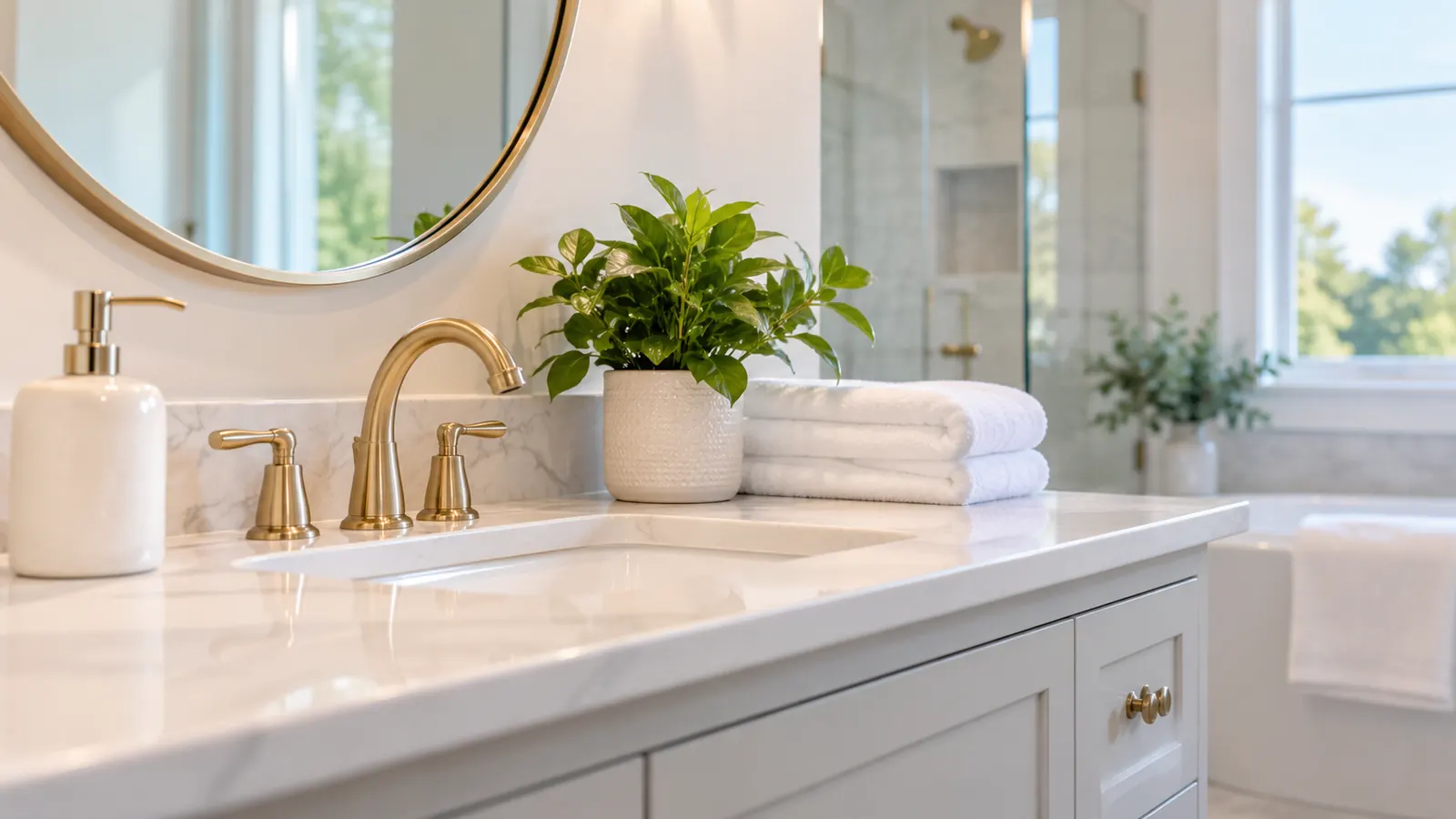
Once the room is dry and clean, staging is simple: white or light towels folded on the bar, a plant, a new bath mat and an empty counter except for a soap dispenser without a label. Remove razors, medicines and toiletries from view; buyers will open the vanity.
Run the bathroom fan during and after every shower while the house is listed. It costs nothing and prevents fresh mildew between showings.
Painting cabinets or walls
A fresh coat of paint is a common pre-listing project. EPA notes that paints, varnishes and wax contain organic solvents, that levels of several organic compounds average two to five times higher indoors than outdoors, and that during and for several hours after activities such as paint stripping, levels may reach 1,000 times background outdoor levels. Ventilate well while painting, finish a few days before the first showing and remove opened cans from the house.
Disclosure: the plumbing questions
North Carolina’s Residential Property and Owners’ Association Disclosure Statement asks about the water supply, the material of the water pipes, the water heater’s fuel source and year, the sewage system and whether there is a problem with the plumbing system, including pipes, fixtures and the water heater. It also asks about water seepage, dampness or standing water in the basement, crawl space or slab. Staging a kitchen or bath never changes what you know about these items. Answer the form honestly, and if you answer Yes to a problem, the form requires a written explanation or an expert’s report.
Disposing of old fixtures
If you replace a vanity, toilet or countertop before listing, plan for the debris. Raleigh’s bulky and special load services never collect remodeling debris, listing toilets, sinks, mirrors, cabinets, countertops and flooring among the excluded items. Durham County’s convenience sites also refuse construction and demolition material, including toilets and tile. In Greensboro, toilets are on the city’s list of bulk trash items, but other construction debris has to fit in the green cart or a 32-gallon container. Ask your contractor whether hauling is included in the quote.
Kitchens and baths are steps two and three in our The North Carolina Home Staging Checklist: Six Weeks From Cluttered to Listed. When they are ready, move on to Staging for Listing Photos: Getting Each Room Camera-Ready, and the Rules on Virtual Staging.